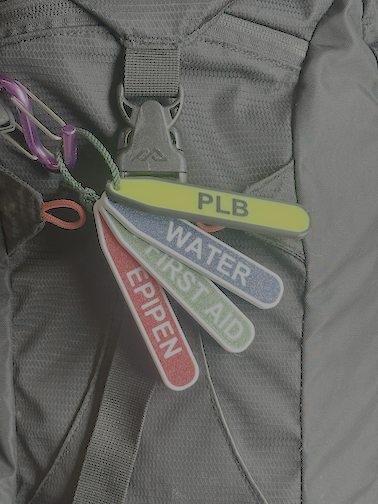

There is a specific problem that comes up on longer journeys. You have done the planning. You have a risk assessment, a route card, weather thresholds, a briefing. Then something changes out in the field and you need to make a call without your planning documents in front of you, usually while managing a group of people who are watching to see what you do.
The Field Guide to Adventurous Journeys is the resource for exactly that situation. It is pocket-sized on purpose. It goes in the pack, not in the car. The information in it is the information you need when you are already out there.
What it covers
The field guide is focused entirely on the in-field part of the journey, the part that planning documents do not reach. It covers:
- Navigation in the field: how to stay on route when conditions make it harder than it looked on the map, and what to do when you are not certain where you are
- Reading terrain and weather: what to actually look for and what it means for your next decision
- Fatigue management: recognising it early in other people, which is considerably harder than recognising it in yourself
- Turnaround decisions: a practical framework for cutting the journey short when needed, and how to manage it so it does not become a group dynamics problem
- Medical situations in the field: what to do for the conditions you are most likely to actually encounter
- Emergency response: the specific actions to take when something goes seriously wrong and you need to get help
The turnaround section
The turnaround section is the part most leaders find most useful, and the part most people are least prepared for before they read it. Deciding to turn around is the right call more often than it actually happens. The psychology of a group that has planned a journey, travelled to the start, and begun walking is strongly biased toward continuing. The guide gives a framework for making a turnaround decision based on time, conditions, group state, and remaining distance, rather than waiting until the situation has deteriorated past the point where turning around feels like a failure.
The key principle is that a turnaround is not a failed journey. A turnaround at the right time is good leadership. The participants who grumble about it at the time will tell the story differently in a few years.
The fatigue section
Fatigue in a group context is trickier than fatigue in an individual context. When you are tired, you know it. When someone else in the group is fatigued, they may not tell you, especially younger participants who do not want to be the reason the group slows down. The guide covers the observable signs of fatigue in others, the points in a journey where it is most likely to show up, and how to address it without making the affected person feel singled out.
The size of it
The field guide is genuinely pocket-sized. It fits in the lid pocket of most packs or the chest pocket of a jacket. The physical copy is the format it was designed for. A PDF is useful for reading and planning, but the point of the field guide is that it is with you when you need it. Most people who use the digital version find they want the physical copy once they have read it through.
Getting a copy
The field guide is available as a free PDF download from the Logs Kept Simple website. The physical copy is available on Amazon. It is the cheaper of the two books because it is smaller, and it is the one that gets more regular use once people have both.