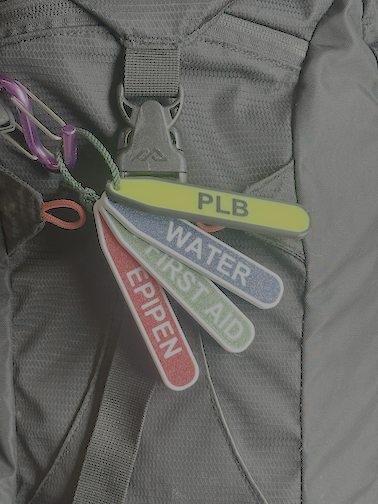

Most first aid training is designed for situations where emergency services are minutes away. In a remote outdoor setting, help is measured in hours, and in genuinely remote locations, in days. The principles of first aid are the same, but the decision-making around what to do next is fundamentally different when you cannot hand a patient over to paramedics in ten minutes. This article is about the decision-making framework, not the clinical skills. Both matter. This one is less often taught.
Scene Safety and Initial Assessment
Before you approach an injured person, stop and assess the scene. Is there an ongoing hazard? A rockfall risk, an unstable slope, a flood-rising creek, a vehicle that is not secured. A second casualty makes the situation much worse and removes a potential rescuer. Ensure the scene is safe or that you are approaching in a way that manages the hazard. Once you reach the casualty, a rapid primary survey covers airway, breathing, circulation, and consciousness. These are the immediate life threats. Deal with them before anything else.
Calling for Help: What You Have and What You Need
The communication options in order of reliability in remote Australian terrain are: satellite communicator (Garmin inReach, SPOT, or similar), PLB (personal locator beacon, 406MHz, COSPAS-SARSAT), mobile phone (check coverage maps before you go, coverage is absent in most remote areas), UHF radio (useful for communication within a group but limited range for external help). Know what communication you have before the trip. Know how to use it. Know what activating a PLB does and what happens next. A PLB activation initiates a coordinated rescue response through AMSA (Australian Maritime Safety Authority) and is appropriate for life-threatening emergencies where other communication has failed.
The Evacuation Decision
The hardest decision in remote emergency management is often whether to evacuate and if so, by what means. The options are typically: self-evacuation (the casualty walks out with assistance), assisted evacuation (the group carries or supports the casualty to a vehicle access point), helicopter evacuation (appropriate for life threats, serious injuries, or situations where surface evacuation is not feasible), and wait for ground rescue. Each option has implications for time, risk, and the physical demands on the group. Making this decision requires honest assessment of the injury, the terrain, the group's capability, the weather forecast, and how far help is.
The general principles: for life-threatening conditions, call for help immediately and focus on keeping the patient alive until help arrives. For serious but not immediately life-threatening injuries (suspected fracture, significant laceration, moderate medical event), assess whether the patient can be moved and what the impact of movement will be. For minor injuries that can be managed on track, treat and continue with a modified plan. The mistake to avoid is not making a decision. Sitting with an injured person for two hours while discussing options, when a satellite call placed thirty minutes ago would have a helicopter en route, costs precious time.
Managing the Group During an Incident
When a serious incident occurs, the rest of the group needs management. Bystanders without a specific task tend to crowd, speculate, and amplify the emotional intensity of the situation. Assign roles: one person stays with the casualty and manages first aid, one person manages communication and coordinates the response, others are assigned specific tasks. Keeping people busy and useful reduces panic and ensures critical tasks get done. The youngest and most anxious group members may need to be assigned a simple task away from the casualty to keep them occupied.
Improvised Rescue Equipment
In a remote setting you work with what you have. Sleeping mats and tent poles can be combined to make a stretcher for short carries. Pack frames from large packs can be used similarly. A person with a lower-limb injury can often be supported between two walkers using trekking poles as crutches. Splinting a suspected fracture uses the principles of immobilising the joint above and below the injury using available padding and rigid support. The principle is to prevent further injury during transport, not to achieve a clinical result. Good enough to get to help is the goal.
After the Incident
After any significant incident, a thorough debrief and written record are important. What happened, when, the sequence of decisions, who did what, what communication was sent and when. This record is important for any subsequent investigation, for learning and improving future responses, and for your organisation's incident management process. Log the incident in LogsKeptSimple with as much detail as possible while memory is fresh. A written record made shortly after the event is far more reliable than recollection weeks later if a formal review follows.